




























Auto Market Shows Dual Growth with Record-High Share for New Energy Vehicles
The China Association of Automobile Manufacturers (CAAM) released data on June 11, showing that China's automobile production and sales increased by more than 10% year-on-year in the first five months of this year, indicating a stable and improving trend in the overall operation of the automobile industry.
During the first five months, automobile production and sales reached 12.826 million units and 12.748 million units, respectively, up 12.7% and 10.9% year-on-year. Among them, new energy vehicle (NEV) production and sales amounted to 5.699 million units and 5.608 million units, respectively, up 45.2% and 44% year-on-year. Sales of new energy vehicles accounted for 44% of total new vehicle sales.

Chen Shihua, Deputy Secretary-General of CAAM, stated, "The 'two new' policies have been expanded and their effects have continued to materialize, coupled with favorable factors such as the launch of new car models by automakers and promotional activities at auto shows in various regions, accelerating the release of consumption vitality in the automobile market." Specifically, NEV production and sales continued to grow rapidly, domestic auto brands embarked on a new stage of upward development, and the growth rate of automobile exports significantly increased.
As the official designated platform for car trade-ins in 2025, the "Government Subsidies" channel on Dongchedi provides consumers with a one-stop subsidy application service. The relevant person in charge of Dongchedi said that consumers have generally formed the awareness of claiming subsidies before purchasing cars, and those who claim subsidies tend to prefer NEVs when buying cars, which significantly promotes industrial development and enhances the vitality of the automobile market.
Driven by subsidy policies, NEV production and sales have grown rapidly. In May, NEV production and sales reached 1.27 million units and 1.307 million units, respectively, up 35% and 36.9% year-on-year. Compared with the previous month, among the main types of NEVs, pure electric vehicle production declined slightly while sales increased slightly; fuel cell vehicle production and sales fell significantly; and plug-in hybrid vehicle production and sales showed double-digit growth.
The transformation towards intelligentization and new energization of the automobile industry has brought development opportunities to Chinese auto brands. In the first five months, Chinese brand passenger cars sold 7.562 million units, up 26.3% year-on-year, accounting for 68.8% of total passenger car sales. The market share increased by 7.5 percentage points compared with the same period last year, reaching a record high. Among them, the entire series of Hongmeng Intelligent Drive delivered 44,454 new vehicles in May, reaching a new high. The cumulative deliveries of the Askev M9 exceeded 200,000 units, setting a new record for deliveries in the 500,000 yuan price range.
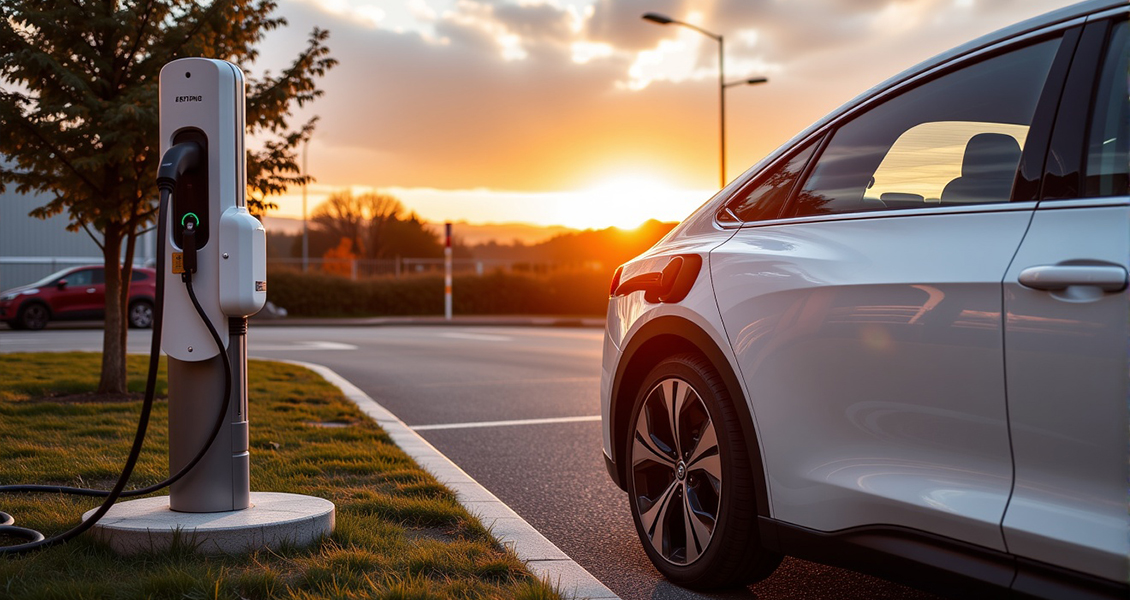
In May, BYD sold 293,000 domestic passenger cars, of which 231,000 were equipped with intelligent driving systems, accounting for 79% of the total. In the increasingly competitive smart car market, BYD has leveraged economies of scale to reduce the cost of intelligent driving technology, enabling large-scale adoption of the technology.
While domestic demand in the automobile market remains favorable, the growth rate of exports has also increased significantly, especially for NEV exports. In May, NEV exports amounted to 212,000 units, up 6.1% month-on-month and 1.2 times year-on-year. In the first five months, NEV exports reached 855,000 units, up 64.6% year-on-year. Cui Dongshu, Secretary-General of the Passenger Car Market Information Joint Conference of the China Automobile Dealers Association, believes that the main drivers of export growth are the enhanced competitiveness of Chinese products and slight growth in markets of countries in the southern hemisphere, particularly the Middle East, which has become the core market for export growth.
The accelerated overseas expansion of Chinese automobiles is mainly attributed to the accelerated overseas layout of the entire automobile industry chain. Liu Xihe, CEO of Jingxi Zhixing Group, said the company has 10 production bases and 7 R&D centers, four of which are production bases and five are R&D centers located in Europe and North America, with the China headquarters overseeing strategy and core technology research and development. Relying on leading technologies such as magnetorheological suspension and electromechanical brake systems, the company will continue to enhance the competitiveness of the Chinese automobile industry. At present, Chinese auto parts enterprises are transitioning from "going overseas in scale" to "value upgrading," replicating the "China speed" and "China cost" to achieve true value creation overseas.
In the first five months, China's automobile production and sales continued to show rapid growth, laying a solid foundation for the increase in annual automobile production and sales. CAAM also noted that although China's automobile industry as a whole is operating stably and improving, with market vitality continuously being unleashed, the industry's profitability has continued to decline, and the situation of "increasing volume without increasing profits" has not improved. The "involutionary" competition mainly manifested as disordered "price wars" is an important factor in the decline of industry benefits. On May 31, the association issued the "Initiative on Maintaining Fair Competition Order and Promoting Healthy Industry Development," aiming to guide all enterprises to adhere to the principle of fair competition, persist in innovation-driven development, continuously improve product quality and service quality, and jointly maintain the healthy development of the industry.
